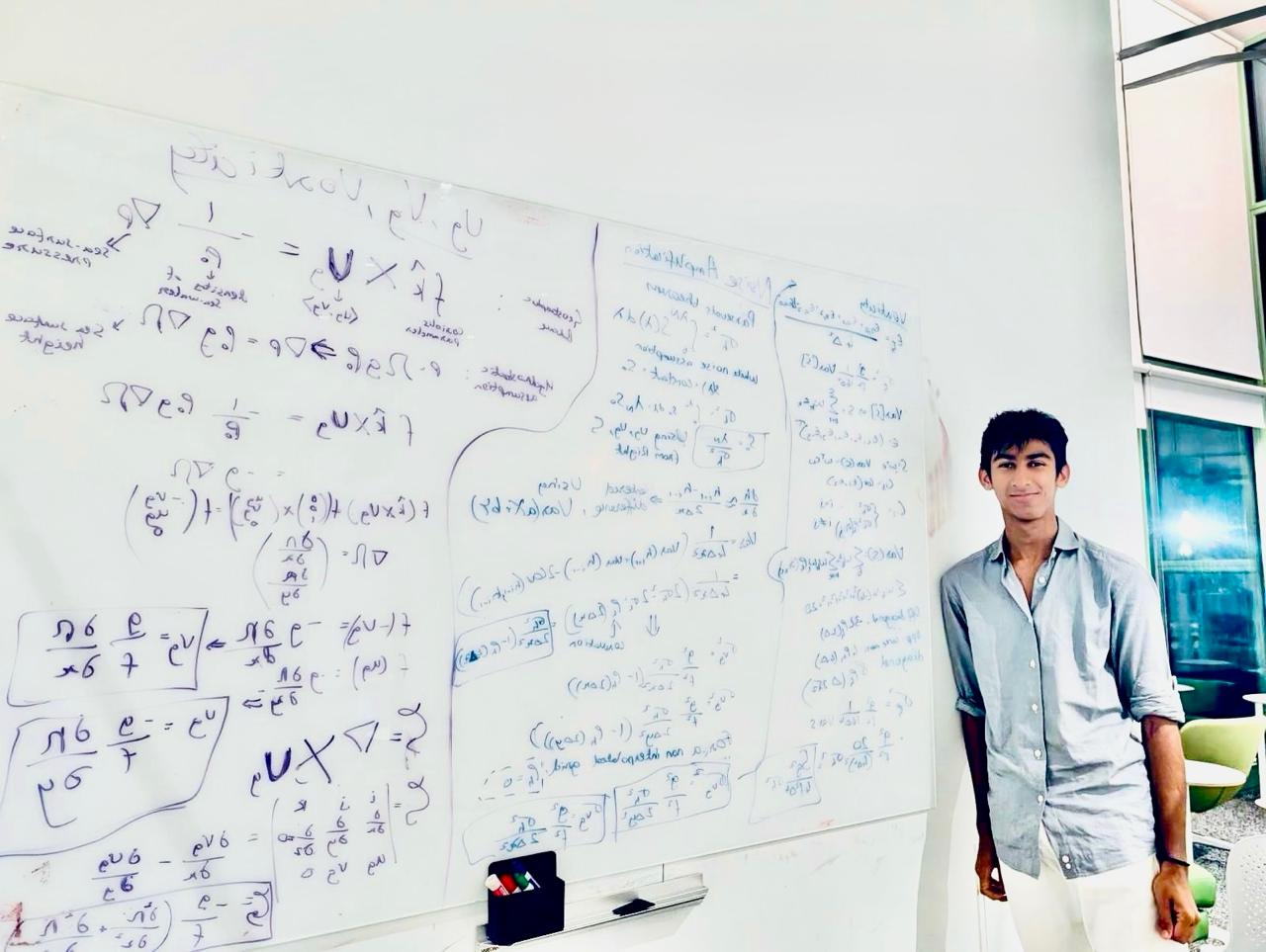
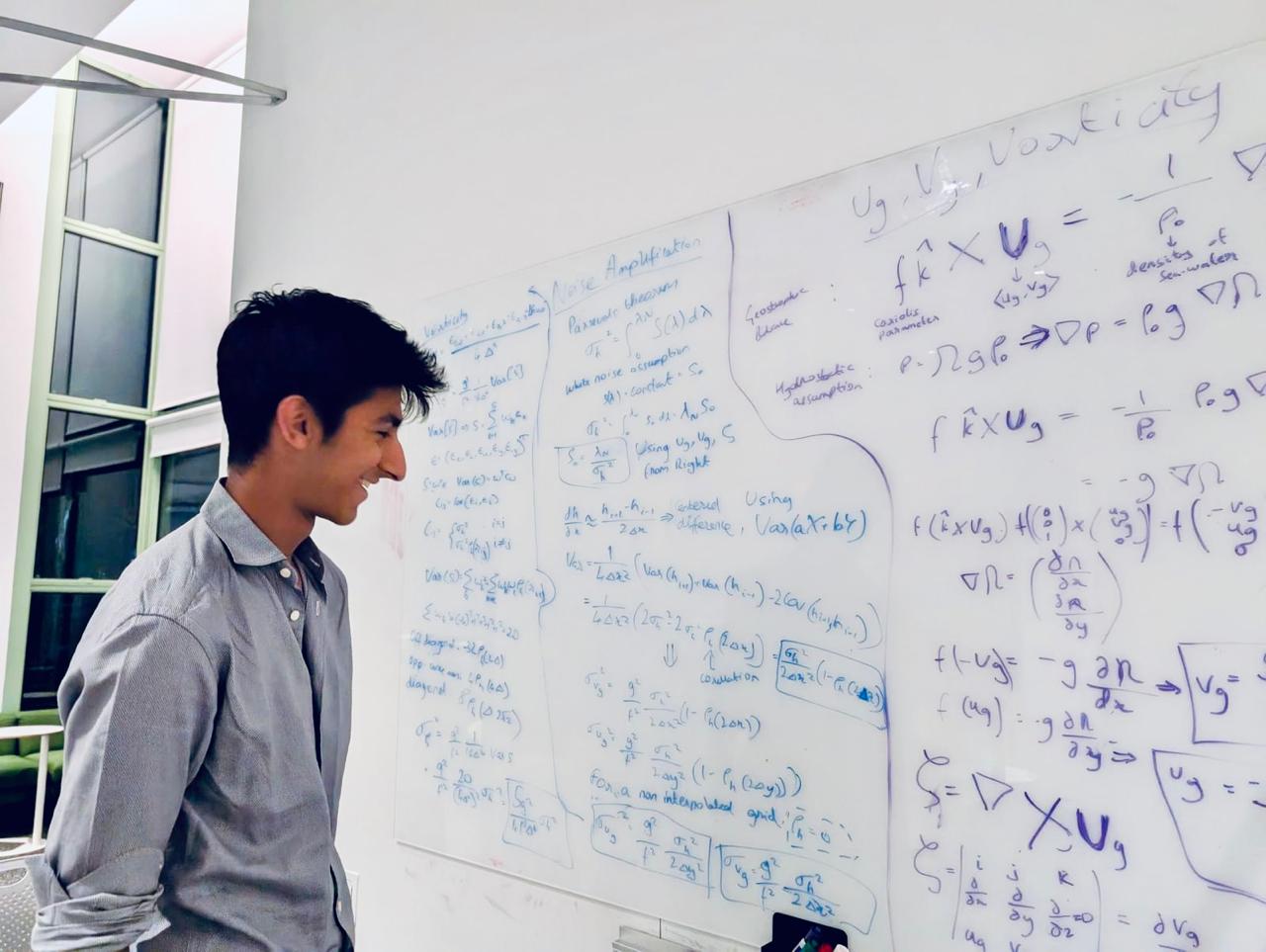
Modeling and predicting ocean currents at spatial scales below 50 km is essential for understanding key ocean processes such as biogeochemical fluxes and nutrient transport. The Surface Water and Ocean Topography mission addresses long standing observational limitations by providing high resolution sea surface height measurements through radar interferometry. However, instrumental noise and its amplification during differentiation pose significant challenges for deriving reliable geostrophic velocities and vorticity fields.
This work models SWOT sea surface height observations in the Gulf of Mexico using bell curve shaped smoothing filters to suppress high frequency noise while preserving submesoscale ocean features. Vorticity fields computed from the smoothed data are validated against high resolution numerical simulations from the MIT MSEAS GRASE experiment. To reconstruct vorticity from the spatially incomplete satellite observations, both a deterministic U Net architecture and a guided diffusion model based on neural stochastic differential equations are trained. The diffusion model achieves a low reconstruction error of 3.2 × 10⁻² while also providing physically meaningful uncertainty estimates.
These results demonstrate the potential of combining SWOT observations with generative modeling to resolve submesoscale dynamics, enabling improved forecasting and climate analysis at unprecedented spatial resolution.